Structural Change Detection in Two-Thousand-Line Agent Diffs
Agent diffs hide architectural change that only a graph view reveals.
Sponsored by Graphide
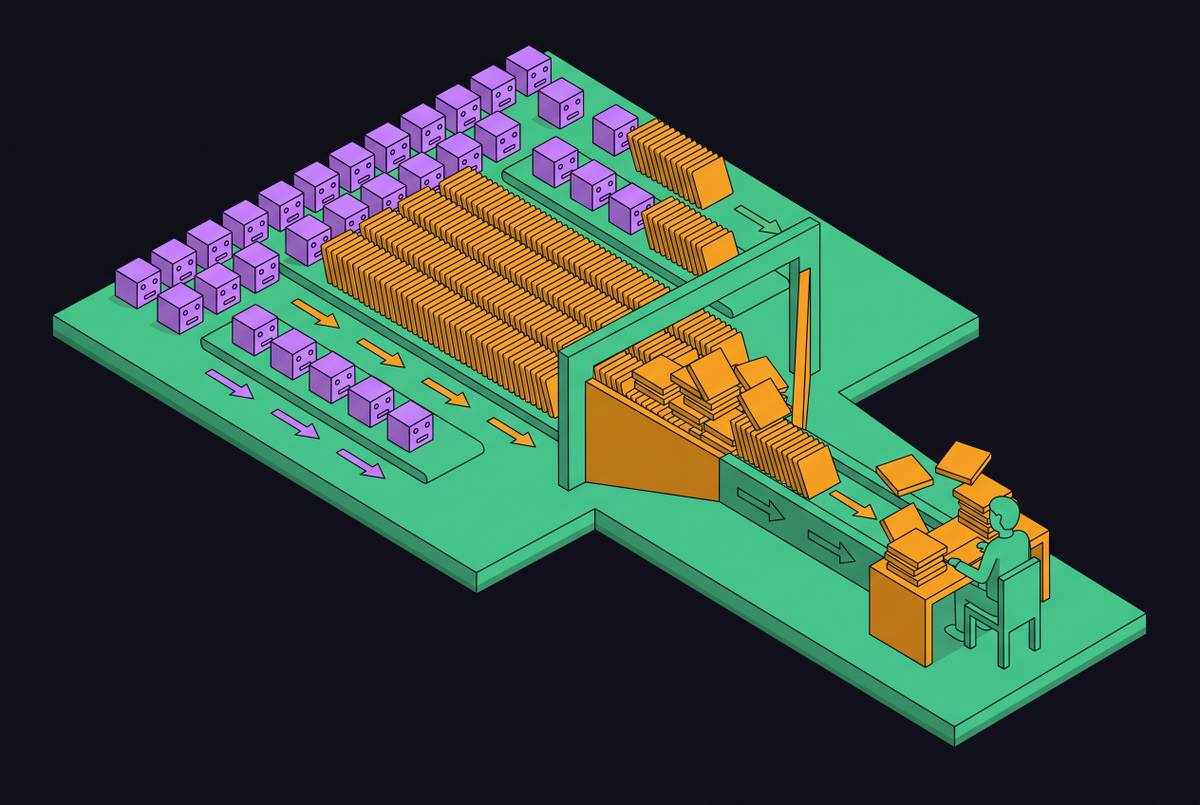
A two-thousand-line diff from an agent is not a reading problem. It is a representation problem. The text of the diff is the wrong unit of analysis for detecting what actually changed in the architecture, and no reviewer speed, human or automated, fixes that mismatch.
Why two-thousand-line agent diffs are not a scale problem but a unit-of-analysis problem
An agent task that asks for a rate-limit feature can silently bundle three separate concerns into one diff: a refactoring that moves helper functions, a behavior change that alters checkout logic, and entirely new feature code. None of these is labeled as such in the patch. The hunk headers show only line numbers and context, and the reviewer confronts a wall of modifications whose relationship to one another remains invisible. This is the concrete shape of the problem, and it is not that the diff is too long to read.
The empirical evidence confirms that agent PRs differ from human PRs in kind, not merely in size. A large-scale study of tens of thousands of merged agentic and human pull requests, presented at the 23rd International Conference on Mining Software Repositories in April 2026, found substantial differences in commit count, with a Cliff's delta of 0.5429, alongside moderate differences in files touched and deleted lines. A line-by-line diff does not surface them because it presents the changes as an undifferentiated sequence of text mutations rather than as the graph-level operations they represent.
The diff format carries an additional mechanical unreliability when generated by an agent. Autoregressive models do not count lines. They predict tokens. The hunk header integers that tell a patch where to apply can therefore be miscalculated, producing a patch that misapplies. The artifact a reviewer reads may not accurately represent what was written to disk. A reviewer who spends an hour scrutinizing a two-thousand-line diff may be inspecting a fiction.
The strongest objection at this point is that better tooling and smaller PRs solve the problem. Agents naturally produce large, tangled changesets that resist splitting without semantic understanding of what the code does. Ten two-hundred-line PRs are not more reviewable than one two-thousand-line PR when the failure mode is that text-level inspection cannot see architectural change at any size.
What line-by-line review actually detects, and what it structurally cannot
Line-by-line review, whether performed by a human or a current AI reviewer, reliably catches local errors. Typos, missing null checks, simple logic flaws, style violations, all of these sit within the surface that diff-based inspection was designed to examine. The limitation is not competence. It is scope.
What diff-based review structurally cannot see is how changes interact with the codebase beyond the patch itself. An architectural problem typically lives in the relationship between a changed file and an unchanged one, in a new dependency that crosses a layer boundary, or in a call path that introduces a cycle. A diff-based reviewer sees only what changed in the PR. The surrounding architecture, the modules that now depend on this new code, the boundaries that this change violates, none of these appear in the review surface.
Working memory compounds the failure. A thousand-line diff overwhelms the context window of both a human reviewer and an AI model. The reviewer ends up catching indentation problems while a circular dependency sails through.
The human-AI collaboration in review does not fix this, because both parties are reading the same wrong representation. An empirical analysis of 278,790 code review conversations across 300 open-source GitHub projects compared feedback characteristics, collaboration patterns, and code quality impact between AI agents and human reviewers. Adding an AI reviewer to a human reviewer doubles the line-reading capacity. It does not create a structural inspection capability that neither review possesses.
The practical consequence is that agent-generated code compiles, follows style guides, and passes baseline tests while remaining vulnerable under load, edge cases, and invalid inputs. These vulnerabilities stem from underlying logic and structure, not from syntax, and therefore survive every check a diff-based review performs. The code looks correct at the level where anyone is looking, and falls over at the level where nobody is.
What structural change actually looks like at the graph level
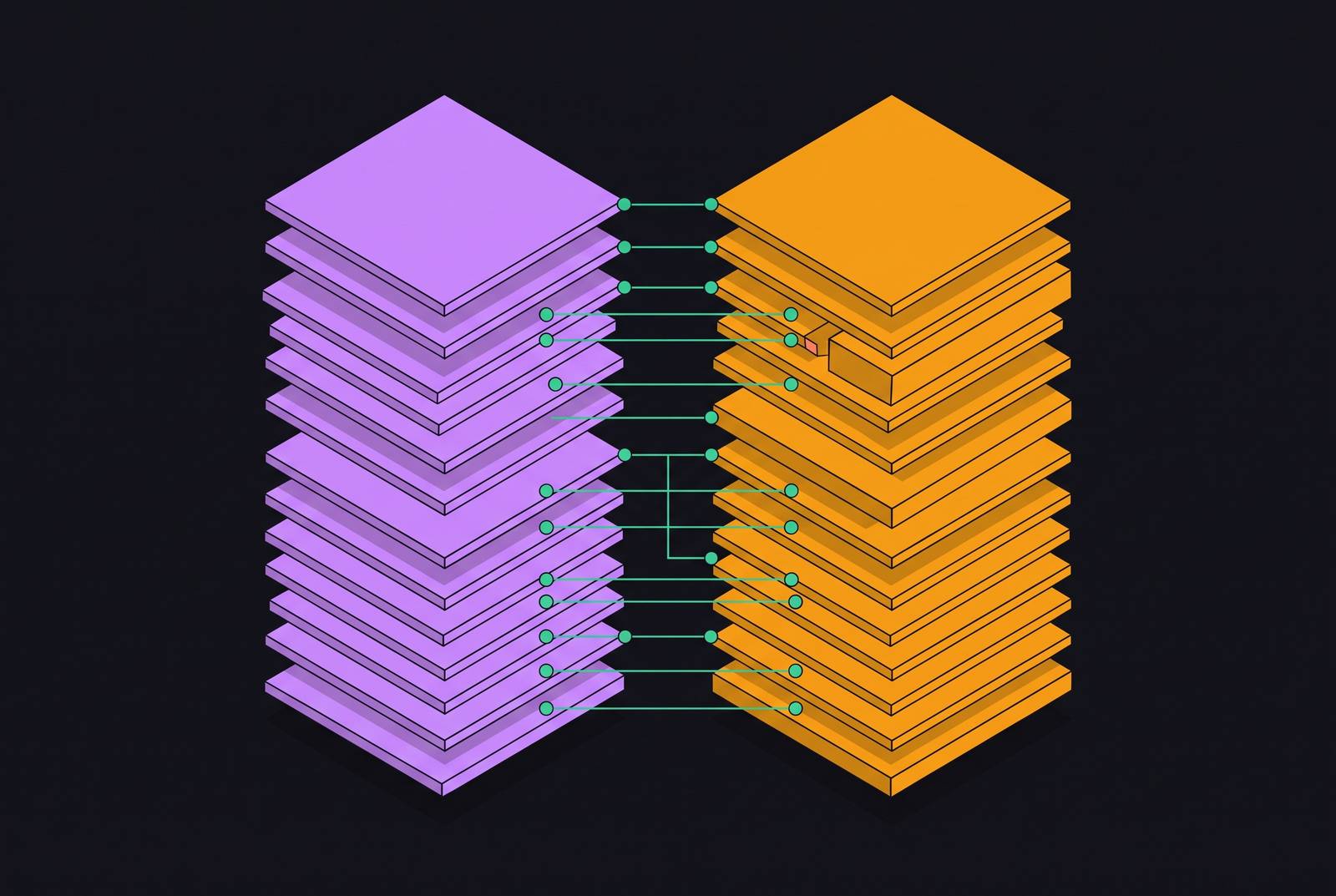
A moved function is the cleanest demonstration of the mismatch between diff representation and structural reality. The function's text is largely unchanged. What changed is every callsite's dependency path, a graph mutation that the line-diff format renders as two unrelated text events with no visible connection between them.
The graph-level changes that an agent diff introduces have identifiable shapes. A new call edge from one module to another can violate a layer boundary. A new file can be created in an invalid location within the layered structure, a violation that no amount of textual correctness repairs. These are the changes that determine whether a codebase remains maintainable or dissolves into a dependency tangle.
None of these changes leaves a reliable textual signature. A new call edge looks like a single function invocation, perhaps a dozen characters of code. The architectural consequence of these tiny textual events is enormous, and the diff format gives no indication that anything structurally significant has occurred.
Structural diff approaches have made this concrete. Research into agentic code review confirms that intent is often latent in conversation logs, plans, and metadata rather than explicitly stated in the diff itself. The representation must expose these relationships.
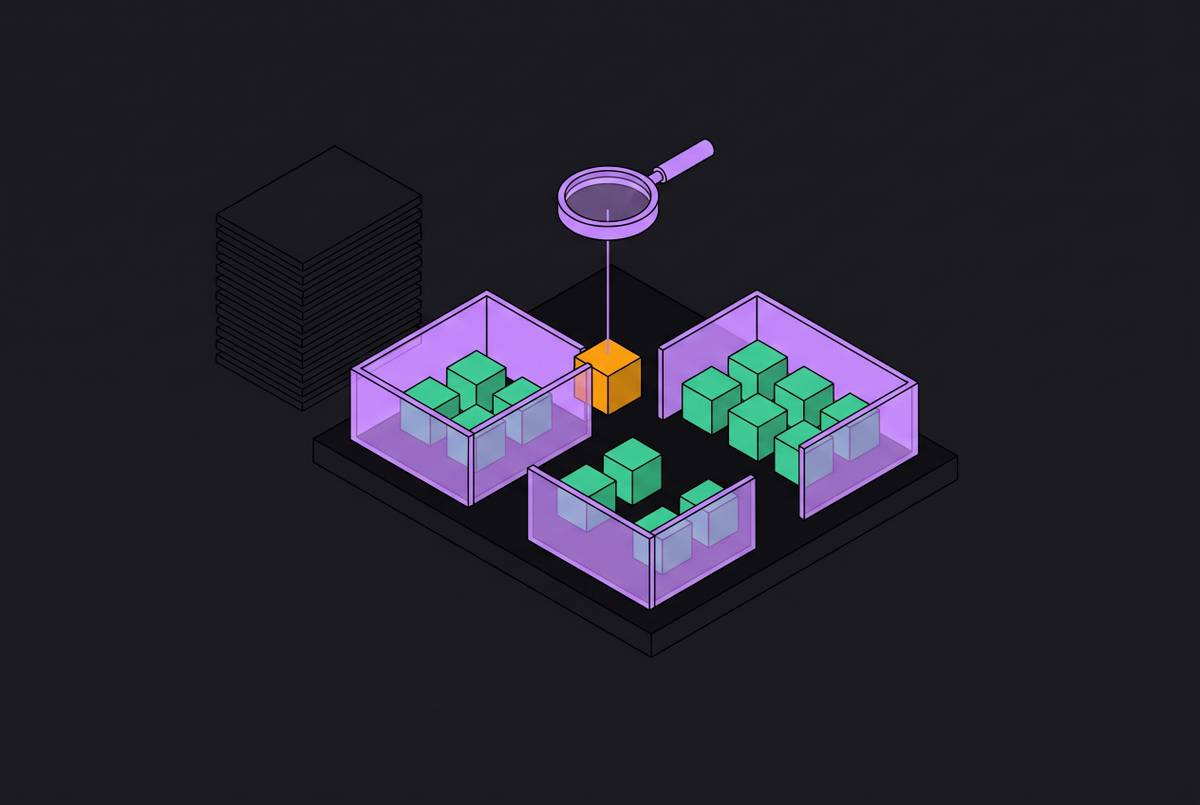
A graph representation makes a new dependency edge as visible as a new node. When every module, file, class, function, and call relationship is mapped, a novel edge appears as a bright line between two previously unconnected nodes. The change is structural, so the representation must be structural. This is not a metaphor. It is an engineering requirement.
How structural detection tools reason about what moved, not what changed in text
The most effective detection approaches already operate above the diff, reasoning about relationships and intent rather than text mutations. Four research directions converge on this point, and each contributes a piece of the structural detection problem. The ARCTIC approach infers why a change was made from conversation logs and metadata, then measures divergence between the developer's intent and the agent's output via backtranslation. It ranks the regions of a diff most warranting human scrutiny rather than asking reviewers to read everything. Its contribution is to surface the gap between what the agent was asked to do and what it built, which is a structural signal, not a textual one. The drift between intent and implementation lives in the architecture, not in any individual line.
The SemaDiff approach addresses the entangled-concern problem directly. It identifies whether a commit is purely semantic-preserving by extracting unchanged dependent code that calls the modified code and, when needed, generating an additional synthetic dependent class via an LLM, then generating tests for that dependent code to exercise the changed code in both versions. A single diff that bundles refactoring and behavior change can be separated into its components before review begins.
The ContextCov approach takes dependency-graph enforcement as its starting point. If an agent creates a file in an invalid location, it receives immediate feedback citing the rule, the violation, and a suggested correction. The layer violations, cyclic dependencies, and module placement errors that a line-diff cannot see become machine-executable checks against the graph, a shift from inspection to constraint.
The NovaFabric approach demonstrates that structural alignment, not text diffing, is the right operation for comparing agent outputs. It aligns the model and tool call structure of two agent runs rather than diffing bytes, localizing the injected change in a labeled corpus of single-mutation pairs across seven change classes with high recall and precision. When the question is what an agent changed between two runs, the answer lives in the run's structural trace, not in the textual delta.
All four approaches share a common property: they reason about relationships, boundaries, and intent, the graph-level properties that determine whether code holds together. Each approach detects structural change at a point in time. None maintains the graph as a persistent artifact that constrains generation before it happens.
Why a code review alternative for large AI-generated diffs must live in the repo and be enforceable in CI
Detecting architectural drift at review time is already too late. A graph that exists only as a review-time visualization cannot prevent the drift. It can only display it after it has happened.
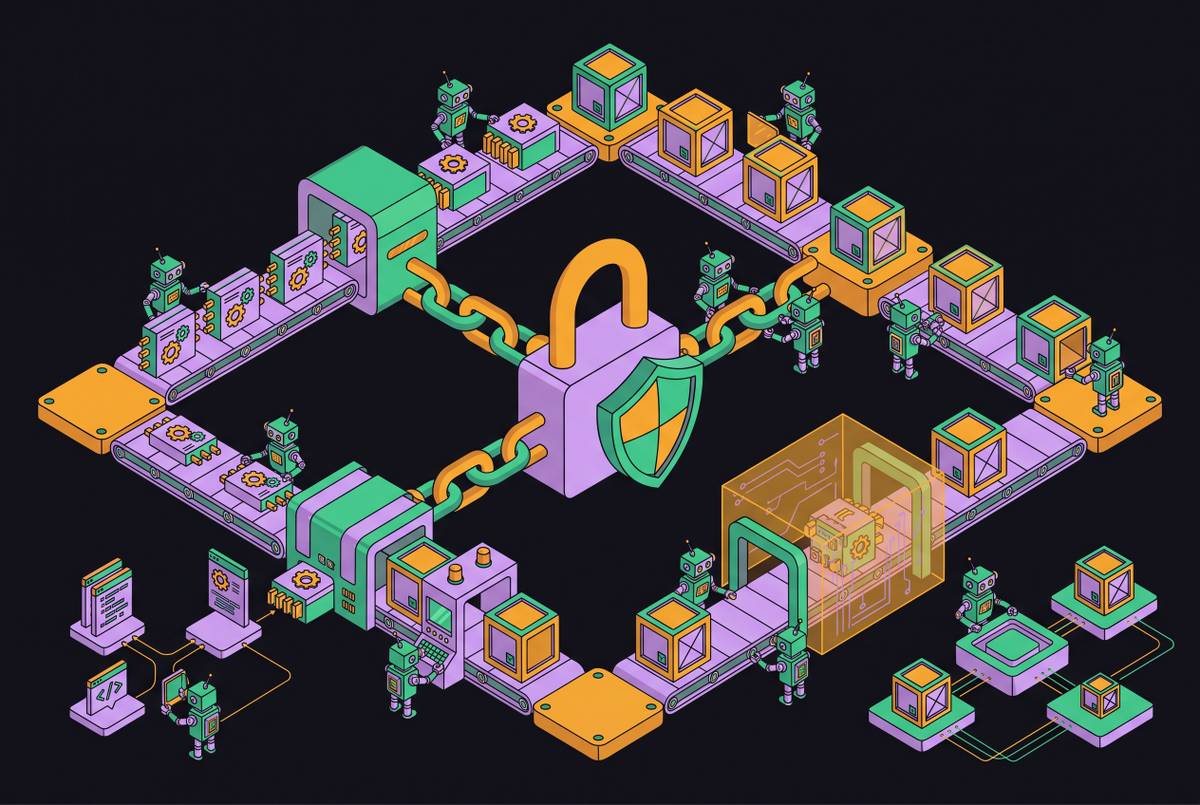
The practitioner direction is toward machine-executable constraints, not advisory rules. Telling agents what the architecture is as documentation they will ignore does nothing. Encoding layer boundaries, circular-dependency prohibitions, and module isolation rules as constraints that agents cannot violate changes the situation fundamentally. Enforcement operates at three moments: pre-generation, by embedding constraints in system prompts. Post-generation, by running validators that fail on violation. And CI validation, by performing comprehensive architecture checks before merge.
A CI gate that exits non-zero and blocks a merge is categorically more valuable than post-hoc architecture review. It catches violations before they compound, before they accumulate technical debt, and before they require a senior engineer to untangle what an agent built on a drifted foundation. The gate does not argue with the agent or hope it reads documentation. It fails the build, and the change does not merge.
What a useful architectural gate reports matters as much as the fact that it blocks. A developer who receives this report can act immediately. An unexplained non-zero exit produces a different failure mode: a frustrated developer hunting through logs to decode what the validator objected to, which is no better than line-by-line review for efficiency.
What the developer's role becomes when the graph is the interface, not the diff
When a structural map of the codebase is the thing a developer looks at, the review task inverts. The question is no longer whether each line is correct. It is whether the agent touched the right modules, added the right edges, and respected the right boundaries. The cognitive load collapses from two thousand units to perhaps a dozen.
The skill-set inversion is already underway. The primary human role in building software is increasingly orchestrating agents, evaluating their output, and ensuring the system solves the right problems rather than writing every line. Reviewing AI output quickly and accurately is becoming a core competency. What this demands is not reading every line for understanding but scanning for correctness, security issues, and alignment with requirements. That is a different cognitive gear than writing code, and it rewards a different kind of literacy.
Graph literacy is the new core skill. A developer who can see what an agent built in the architecture, which modules it touched, which edges it added, which boundaries it crossed, can evaluate the change with precision. Steering agents on a shared architectural model, directing which modules to touch and which boundaries to respect, produces better output than writing prompts and hoping the structure survives. The developer becomes an architect of constraints rather than a proofreader of tokens.
For teams that do not make this shift, the consequence is silent accumulation. Architecture drift accumulates invisibly, the design disappears into the code, and no amount of post-hoc review recovers it. The agents will have already built on the drifted foundation before the drift is visible in any diff. Reading a codebase line by line is becoming an obsolete activity. The developers who adapt earliest are the ones who build graph literacy now, while the tooling is young and the patterns are still forming. That literacy, not faster reading, is what will let a human remain the accountable decision-maker in a codebase that agents increasingly produce.
Current verification workflow
Large agent-written changes need both a CI verdict and review findings whose evidence a reviewer can inspect. Graphide CI runs existing GitHub Actions jobs on Graphide runners, using warm caches, and splitting long test steps only where a check shows every result stays the same, to reduce waiting while preserving the pass/fail verdict. A failing test fails the job. Graphide review is a separate product that presents changed behavior and findings with evidence; it does not block merging on its own. Consult the current documentation for supported workloads and limitations.
Product information updated November 5, 2026 to reflect Graphide’s current CI and review products.